The oldest housing in this service area
San Bernardino has the oldest housing stock of the fourteen cities on this site by the measure that matters most for cabinet work. 34.0 percent of its 67,108 housing units were built in 1959 or earlier, ahead of Colton's 29.7 percent, and 60.2 percent were built in 1979 or earlier. The median housing unit dates from 1973.
That is a function of the city's history. San Bernardino is the county seat and one of the oldest settlements in the Inland Empire, with housing that long predates the postwar development of the surrounding region. Only 10.3 percent of the stock was built in 2000 or later.
Two further figures shape the advice on this page. The median owner occupied value is $422,300, the lowest here, and owner occupancy is 50.0 percent, also the lowest. Old housing, constrained budgets and a large rental share together make refacing, upgrades and durable specification the three conversations that matter.
| Measure | San Bernardino | Colton | Riverside |
|---|---|---|---|
| Population | 222,724 | 53,772 | 319,069 |
| Housing units | 67,108 | 17,856 | 99,910 |
| Median year built | 1973 | 1979 | 1976 |
| Built 1979 or earlier | 60.2% | 51.4% | 56.5% |
| Built 1959 or earlier | 34.0% | 29.7% | 26.7% |
| Built 2000 or later | 10.3% | 9.6% | 19.2% |
| Owner occupied | 50.0% | 52.8% | 56.8% |
| Median value | $422,300 | $443,800 | $584,800 |
| One unit detached | 60.5% | 59.3% | 63.7% |
United States Census Bureau, American Community Survey 2024 five year estimates, covering 2020 to 2024.
Start with the carcass inspection
In housing this old, the condition of the cabinet boxes decides the whole project, and that is a finding rather than an opinion. Every cabinet gets opened. Bases are checked for swelling and water damage, shelves for sag, boxes for square, and the sink base is checked most carefully of all because it is the cabinet that fails first and takes the run with it.
Where the boxes are sound and the layout works, refacing delivers the visual change of a new kitchen at a fraction of the cost. Where the boxes have failed, or where the kitchen was drawn before dishwashers and modern refrigerators existed, refacing produces a kitchen that looks new and works exactly as badly as it did, which is the worst outcome available.
A refacing quote produced without that inspection is a quote based on hope, and in this city's housing it is also the quote most likely to become a change order once a sink base turns out to have been quietly wet for a decade.
Lead safe practice, as the default
With 60.2 percent of San Bernardino housing built in 1979 or earlier and 34.0 percent before 1960, the federal lead rule should be the starting assumption on any job in this city rather than an occasional consideration.
The Environmental Protection Agency states that approximately three quarters of homes built before 1978 still contain some lead based paint, and that anyone paid to perform work disturbing painted surfaces in such a home must be a certified firm whose employees are trained in lead safe work practices. That requirement expressly includes sole proprietorships, and a firm cannot legally advertise or perform covered work in a pre 1978 home without firm certification. Covered activities include carpentry and painting preparation.
The minor repair exemption covers work disturbing six square feet or less of paint per room inside, which a kitchen strip out or a refacing preparation passes in the first cabinet, and it never applies to window replacement or to demolition of painted surfaces regardless of area. Paint testing is not required by the rule, but unless documentation exists showing the paint is not lead based, the requirements apply. California is administered by the EPA directly. See the EPA renovation, repair and painting page for contractors→.
Rental and multi-family work
At 50.0 percent owner occupancy, San Bernardino has the largest rental share in this service area, and rental work has a different brief. The governing variable is durability rather than appearance, and the right specification follows from that rather than from a domestic catalogue.
The published reference worth naming is ANSI and KCMA A161.1. Certified cabinets have passed 14 laboratory tests including a 600 pound load test, and KCMA states that between 40 and 50 percent of cabinets fail their first certification attempt. The same programme includes a Severe Use Certification which KCMA says was originally developed by the United States Department of Housing and Urban Development for the wear seen in apartment kitchens. Asking for that specifically is more useful than asking for something hard wearing. See the KCMA certification programme→.
Hardware matters for the same reason. Cycle counts in a rental kitchen are far higher than in a family home, so a stated cycle rating on hinges and a stated weight rating on runners are the right questions. And the lead rules apply to rental property exactly as they do to owner occupied housing, with the documentation mattering more rather than less.
What a measured visit in San Bernardino covers
Every cabinet opened and assessed first. Then the room: walls checked for bow and plumb at three heights, floor measured for fall across each run, services recorded, and appliance openings measured against appliances that exist today rather than against whatever the kitchen was drawn for.
The year the house was built is confirmed, because in this city it will almost always put the job inside the federal lead rule, and that determines who may carry out the removal. For a rental property, the durability brief is settled at the same visit.
The output is an itemised written scope with the linear footage, materials named by location, hardware specified by manufacturer and rating, and a licence number you can check yourself in about ninety seconds at the CSLB licence lookup→. Nothing is committed and no deposit is taken at the visit.
Costs, with the geography stated
| Work | Published figure | Unit | Geography |
|---|---|---|---|
| Laminate refacing | $1,439 to $2,266 | Twelve cabinet kitchen | Riverside, CA, nearest published local figure |
| Refacing per cabinet | $120 to $189 | Per cabinet | Riverside, CA |
| Wood veneer refacing | $2,000 to $6,000 | Per job | Riverside, CA |
| New cabinets | $3,000 to $6,000 | Per kitchen | Riverside, CA |
| Stock cabinets | $8,000 to $11,000 | Per kitchen | Riverside, CA |
| Custom made cabinets | $15,000 to $20,000 | Per kitchen | Riverside, CA |
| Cabinet installation | $1,308 to $11,993 | Per job | Riverside, CA |
| Stock cabinetry | $75 to $400 and up per linear foot, installed | Per linear foot installed | National |
| Semi-custom cabinetry | $150 to $900 and up per linear foot, installed | Per linear foot installed | National |
Published reference ranges read at build time. Rows labelled Riverside are Riverside figures, used because no equivalent San Bernardino page was found.
Standards, permits and the air district
Composite wood has to meet the California limits: CALGreen caps hardwood plywood at 0.05 ppm, particleboard at 0.09 ppm and medium density fibreboard at 0.11 ppm, tested to ASTM E1333, at the CALGreen composite wood products section→. Cabinet replacement in the same footprint is exempt finish work; confirm the local position with the City of San Bernardino. The city is named on the South Coast Air Quality Management District's published jurisdiction list, so Rules 1136 and 1113 govern cabinet finishing here. The district publishes its member cities→.
Where a limited budget goes furthest
With the lowest median owner occupied value of any city covered here, San Bernardino deserves the plain version of this advice rather than the one a cabinet shop usually gives. In order of return per dollar:
First, the base cupboard interiors. Pull-out shelving in the cupboards nearest the sink and the hob, and a designed waste pull-out. Those two change what happens in the kitchen dozens of times a day, need no permit, and cost a fraction of anything else on this list.
Second, the hardware. Soft close across every door, which on many existing hinges is a swap into the same cup drilling, and full extension runners on the pan drawers so the back of a deep drawer is actually reachable.
Third, the doors. Refacing or new fronts, the point at which the kitchen starts to look different as well as work differently, and the point at which the cost steps up noticeably.
Last, the carcasses. Only where something has failed or the layout is being redrawn. A quote that starts here without having discussed the first three has not asked what the budget is meant to achieve.
The three San Bernardino projects we are asked about most
The refacing job. Sound carcasses in a kitchen that looks its age. New doors and fronts, visible frames faced, new hardware, and pull-out conversions added while the doors are off. Lead safe certified preparation as standard.
The pre-1960 kitchen redraw. Scribed custom boxes and a new cabinet schedule in one of the city's many older houses, where the layout rather than the cabinets is the actual complaint.
The rental or multi-family turnaround. Durable specification, severe use rated construction where the budget allows, hardware with stated cycle ratings, and a finish chosen for cleaning. Lead documentation matters more here than anywhere.
What we do here
- Cabinet refacing, after an inspection of every carcass rather than a sample
- Pull-out conversions and soft close upgrades where the boxes are sound
- Scribed custom cabinetry and schedule redraws for kitchens drawn before modern appliances
- Durable rental and multi-family specifications, including severe use rated construction
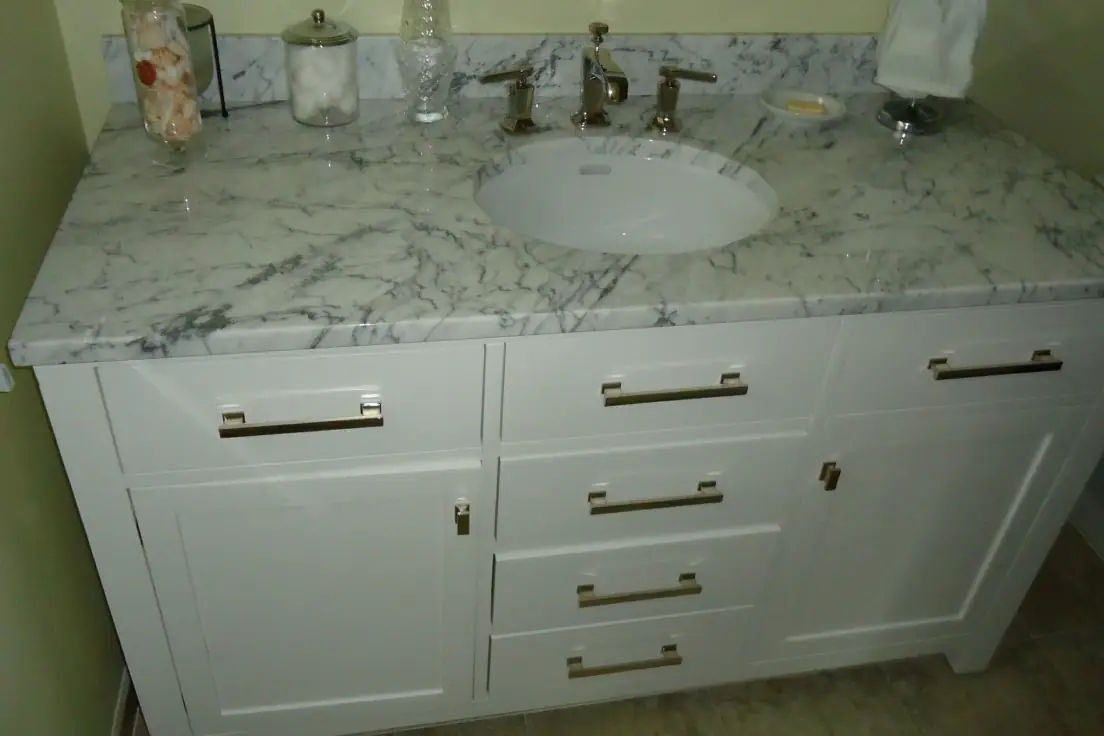
- Bathroom vanities built to the actual wall
- Built-ins and period joinery in the city's older housing
- Countertops templated off installed cabinets
- Lead safe practice as the default, given the age of the housing stock
San Bernardino has the oldest housing stock of the fourteen cities here
San Bernardino’s median housing unit was built in 1973, 34.0 percent of its units predate 1960 and 60.2 percent predate 1980. All three of those are the most extreme figures on this site, ahead of Riverside, Colton and Redlands. Owner occupancy is 50.0 percent, also the lowest of the fourteen, and the median owner occupied value is $422,300, likewise the lowest.
Households here average 3.36 people, with owner occupied at 3.53 and renter occupied at 3.19. The structure mix is the second most multifamily on this site: 60.5 percent single unit detached, 7.3 percent in buildings of two to four units, 8.3 percent in five to nineteen, 14.1 percent in buildings of twenty or more, and 6.6 percent mobile homes.
Read together that is a clear brief. Two things that are occasional elsewhere are the default here: walls, floors and ceilings that have moved enough that a cabinet dimension taken from a drawing will not match the dimension taken from the room, and paint that predates the federal 1978 ban. And a value profile that makes full custom replacement the wrong default recommendation rather than the ambitious one.
| Measure | San Bernardino | Riverside, for comparison |
|---|---|---|
| Average household size | 3.36 | 3.21 |
| Owner occupied households | 3.53 | 3.34 |
| Renter occupied households | 3.19 | 3.04 |
| One unit, detached | 60.5% | 63.7% |
| One unit, attached | 3.2% | 5.0% |
| Buildings of 2 to 4 units | 7.3% | 5.5% |
| Buildings of 5 to 19 units | 8.3% | 10.7% |
| Buildings of 20 or more units | 14.1% | 12.5% |
| Mobile homes | 6.6% | 2.7% |
United States Census Bureau, American Community Survey 2024 five year estimates, covering 2020 to 2024. Average household size by tenure is table B25010; units in structure is table B25024. Percentages are of all housing units and do not reach 100 because the boat, recreational vehicle and van category is omitted.
The permitting difference that actually affects a San Bernardino project
San Bernardino runs its plan submittal differently from every other city on this site, and it is worth knowing before a programme is agreed. The City’s Building and Safety Division states that with the exception of expedited residential solar and residential electric vehicle charging station plans, all plans must be submitted in person, and that it does not accept the submittal of plans or plan check applications by courier, by mail or by email. A short list of residential permit types can be applied for online, which the Division gives as single family electrical rewires, water repipes, electrical panel upgrades and reroofs.
A kitchen alteration is not on that online list. So where a San Bernardino cabinet project does cross into permit territory, the submittal involves a counter visit and physical plans rather than an upload, and the schedule has to allow for it. That is a procedural fact rather than a criticism, and it is precisely the kind of thing a quote never mentions and a homeowner discovers in week two.
What has not changed is where the line sits. The statewide trigger is the same here as anywhere: “Projects that change the configuration of walls, pipes, wiring, roofs, or major appliances typically DO require at least one type of building permit.” A cabinet and countertop replacement in the same footprint, with the sink, the hob and the circuits where they already are, does not need a permit in San Bernardino any more than it does in Riverside. The difference only bites on the jobs that do.
The department to ask is the City of San Bernardino’s own Building & Safety Division→ . The division states that with the exception of expedited residential solar and electric vehicle charging station plans, all plans must be submitted in person, and that it does not accept plans or plan check applications by courier, mail or email. A short list of residential permit types can be applied for online. Local jurisdictions in California may amend the state exempt list, so the version quoted on this site, which is the City of Riverside’s, is not authority for a San Bernardino address.
What the oldest stock on this site actually needs
The honest recommendation for most San Bernardino houses is a cabinet schedule redraw rather than a cabinet upgrade. A kitchen drawn before 1960 assumed a small refrigerator, no dishwasher, no microwave and no pull out waste bin, and reusing that footprint because the plumbing is already there is the most common reason a new kitchen feels like the old one with better doors. Resizing the appliance opening to an appliance that exists, giving waste and recycling a designed home beside the sink, resolving the blind corner and running the uppers to the ceiling instead of stopping at a dusty shelf are the four changes that make the difference, and none of them is primarily about the cabinets.
Where the carcasses are sound, refacing is frequently the right answer rather than the cheap one, and in a city with this value profile that matters. Where they are not, custom boxes are justified by geometry rather than by taste, because at 34.0 percent pre 1960 stock the walls will not be straight and a catalogue box plus a filler strip will show it.
The one non negotiable is lead. Anyone paid to disturb painted surfaces in a home built before 1978 must be a certified firm using lead safe work practices. The requirement reaches sole proprietors, the minor repair exemption of six square feet or less of paint per room inside is exceeded within minutes of a painted run coming off a wall, and with 60.2 percent of this city on the wrong side of that date it applies to most jobs rather than some. Ask for the firm certification number before anybody puts a sander on a painted surface.
One fixed point in San Bernardino: the California Theatre
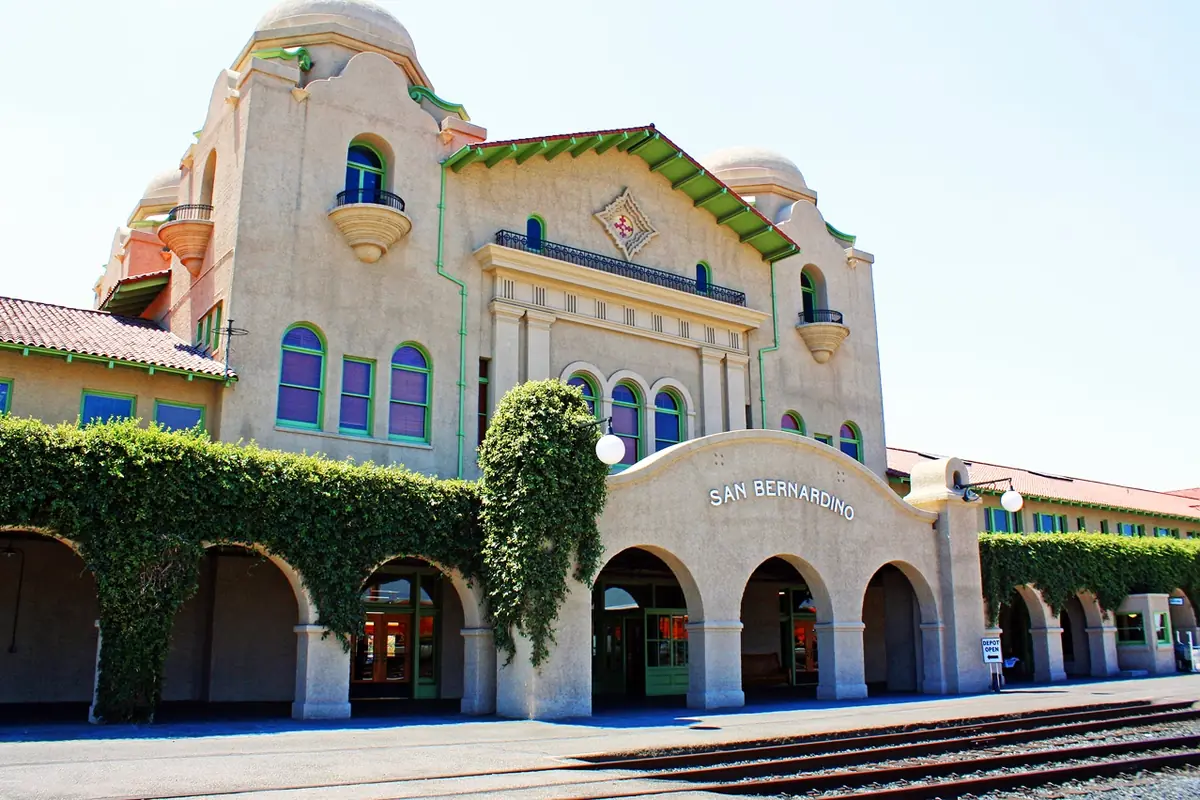
The California Theatre, at 562 West Fourth Street, was added to the National Register of Historic Places on 22 December 2009, and the city also carries the Atchison, Topeka and Santa Fe Railway Passenger and Freight Depot, listed in 2001, the San Bernardino County Court House, listed in 1998, and the downtown US Post Office, listed in 1985.
That density of early twentieth century civic building is the visible version of what the housing data says: this is the oldest built environment in the service area. For a cabinet project the consequence is that original built in casework is more likely to be present here than anywhere else on this site, and more likely to be worth keeping. A pantry cupboard, a plate rail, a built in sideboard or an original breakfast nook in a pre 1940 San Bernardino house is usually better repaired than replaced, and a quote that proposes to strip all of it has not looked at the house properly.
National Register reference for San Bernardino: the California Theatre, 562 West Fourth Street, listed 22 December 2009, reference number 09001116. Taken from the National Register listings for San Bernardino County.
Nearby: Colton, Rialto, Redlands and Riverside. See also cabinet refacing.