What a concealed hinge is doing
A concealed hinge, sometimes called a European or cup hinge, has three parts: a cup bored into the back of the door, an arm, and a mounting plate fixed to the carcass. It is invisible when the door is closed, which is where the name comes from, and it adjusts in three axes, which is what makes a fitted kitchen look fitted.
Those three adjustments are height, which raises and lowers the door; depth, which moves it closer to or further from the carcass; and lateral, which moves it side to side. Between them they allow a door to be squared up after it is hung, which is how a run of doors ends up with reveals that line up. A kitchen that has been fitted and not adjusted has doors that close and gaps that do not match, and the eye reads that immediately.
A concealed hinge is described by four things, all of which belong on a quote because all four determine whether a replacement can be ordered in eight years. The cup diameter, which is the hole bored in the door and is usually thirty five millimetres on modern cabinets. The overlay, meaning how much of the frame or carcass edge the closed door covers. The opening angle, typically between ninety five and one hundred and seventy degrees. And the mounting plate type and height.
How the soft close mechanism works
A small damper, normally an oil filled piston, sits inside the hinge arm or clips onto it. As the door approaches the closed position the damper engages and resists the last part of the travel, slowing the door before it meets the frame. Nothing electronic is involved, nothing needs power, and nothing needs maintaining.
The adjustment that matters is where the damper engages. Too early and the door feels sticky, as though something is wrong with it. Too late and the door bangs before the damper has done anything. Most hardware has an adjustment for this and most installers never touch it, which is why a correctly adjusted soft close kitchen feels noticeably different from a badly adjusted one even though the components are identical.
The drawer equivalent works the same way, built into the runner rather than the hinge, and it has the same engagement adjustment. On a heavy drawer the damper has more mass to arrest, which is one of several reasons the weight rating matters.
Runners, and the extension question
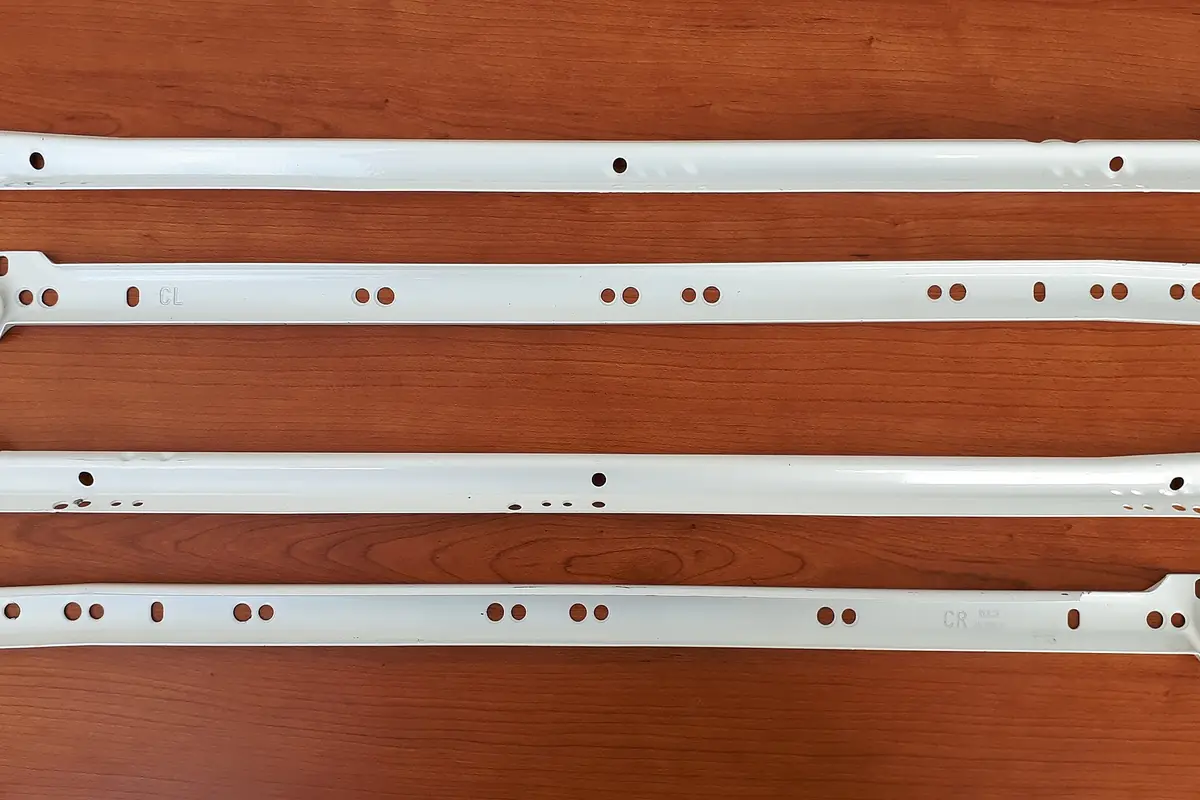
A drawer runner is described by where it mounts and how far it extends, and both matter more than the finish.
| Type | Where it sits | Typical extension | Notes |
|---|---|---|---|
| Bottom mount, roller | Under the drawer box, with a roller at each end | Three quarter | The traditional builder grade runner. Cheap, visible as a gap at the sides, leaves the back of the drawer inside the cabinet |
| Side mount, ball bearing | On the sides of the drawer box | Full, usually | Visible when the drawer is open. Robust, available in high weight ratings, widely retrofittable |
| Undermount, ball bearing | Below the drawer box, invisible | Full, usually | Cleanest appearance, normally includes soft close. Requires a drawer box built to specific dimensions |
| Pull-out shelf gear | Fixed to the carcass sides or to an internal frame | Full | Converts a cupboard with a fixed shelf into a pull-out, which is the highest value retrofit available |
Full extension is the single most useful upgrade in this list. A three quarter extension runner leaves roughly the back quarter of the drawer inside the cabinet, and that back quarter is precisely the part that becomes a place where things are stored permanently rather than temporarily. Full extension brings the whole box out where you can see into it.
The weight rating is the second thing to specify. A drawer of cast iron pans or a pull-out of tinned goods is a heavy, repeated load on a mechanism with moving parts. Under rated runners do not snap; they begin to bind, then run unevenly, then drop at the front when extended, and by the time it is obvious they have been getting worse for a year.
What retrofits and what does not
| Upgrade | Feasibility | What decides it |
|---|---|---|
| Soft close concealed hinges | Usually a straight swap | Matching cup diameter, overlay and mounting plate type |
| Clip on hinge dampers | Almost always possible | Clearance on the hinge arm or carcass side for the damper body |
| Pull-out shelves in a base cupboard | Usually fits inside the existing carcass | The clear internal opening, measured past the face frame and the open hinge |
| Pull-out waste bin | Usually possible | Opening width, and depth available past any plumbing |
| Soft close drawer runners | Often needs a new drawer box | Whether the existing box was built for the runner type being fitted |
| Full extension runners | Often needs a new drawer box | Side clearance, since full extension runners take more width than older bottom mount rails |
| Undermount runners | Usually needs new boxes | Undermount gear requires a box built to its dimensions, including the bottom panel position |
| Corner mechanism | Depends on the corner | Whether the corner is blind or diagonal, and the door opening relative to the mechanism |
The published standards
Two bodies publish standards relevant here, and knowing what each one covers prevents confusion.
For the hardware, the Builders Hardware Manufacturers Association. Its own published description is specific: it is the only organisation accredited by the American National Standards Institute to develop and maintain performance standards for locks, closers, exit devices and other builders hardware, it maintains more than forty ANSI and BHMA standards, and its A156 series covers hinges among other products. Items in its certified directory have been tested independently against cycle, operational, strength, security and finish requirements. The programme is voluntary and open to non members. See the ANSI and BHMA standards overview→.
For the cabinet, ANSI and KCMA A161.1. Certified cabinets have passed 14 laboratory tests including a 600 pound load test, covering structural strength, drawer and door integrity and finish durability. KCMA states that between 40 and 50 percent of cabinets fail their first certification attempt, which tells you more about the test than the seal does, and that certified cabinets exist at every price point. There is also a Severe Use Certification originally developed by the United States Department of Housing and Urban Development for heavy wear environments. See the KCMA certification programme→.
Pull-out types, and which cupboard each suits
| Type | Best for | Watch for |
|---|---|---|
| Single pull-out shelf | Any base cupboard with a fixed shelf | Clear opening width, and the hinge projecting into it |
| Two tier pull-out | Deep base cupboards used daily | Headroom between tiers; tall bottles will not fit two tiers |
| Pull-out waste unit | The base cupboard beside the sink | Bin capacity; a single small bin is worse than the floor standing one it replaced |
| U-shaped under sink pull-out | The sink base | The exact position of the trap, disposal and supply stops |
| Tall larder pull-out | A full height pantry cabinet | Weight rating above all else, and clear floor space in front |
| Corner mechanism | A blind corner base | Cost relative to the volume recovered, and door clearance |
Where the upgrades are worth doing, in order
Most households do this work in stages rather than all at once, which makes the order a real question. The rule that works is frequency of use rather than visibility.
The base cupboards nearest the sink and the hob come first. They are opened many times a day, they are usually the deepest and darkest cupboards in the kitchen, and a pull-out converts them from storage you rummage in to storage you look at. The gain here is larger than anywhere else and the cost is the same as anywhere else.
The waste arrangement comes second if the bin currently stands on the floor. A designed pull-out beside the sink replaces the single most frequent and most irritating interaction in most kitchens, and it recovers floor space at the same time.
Soft close on every door comes third. Cheap per door, and because it frequently fits the existing cup drilling it is often a swap rather than a rebuild. It changes the sound and the feel of the whole room rather than one cupboard, which is why it belongs across the kitchen rather than in part of it.
Full extension runners on the pan and utensil drawers come fourth, because they make the back of a deep drawer reachable. This is the point where a new drawer box may be needed, which is why it sits after the cheaper wins rather than before them.
A corner solution comes last among the worthwhile items, because it is expensive relative to the volume it recovers, even though the volume it recovers is real.
Everything else, the tall unit nobody opens, the cupboard above the refrigerator, the spare bedroom wardrobe, can wait indefinitely. Spending the budget there first is how an upgrade programme runs out of money before it has changed anything.
What good fitting looks like
- Reveals that line up across the run, which is an adjustment pass rather than a fitting pass
- Soft close that engages at the right point, neither sticky nor banging
- Pull-outs that run square under load, checked with weight in them rather than empty
- Hinge cup diameter and overlay recorded, so replacements can be ordered later
- Runner type, extension and weight rating stated on the quote
- Consistent hardware hole centres across the kitchen
- An honest answer about any carcass that is not sound, rather than a mechanism fitted into a damaged box
Related: the upgrades service page, cabinet hardware, and what the box is made of.